
Black Sea: Drifting UXO, UAVs and USVs
Published: September 21, 2026
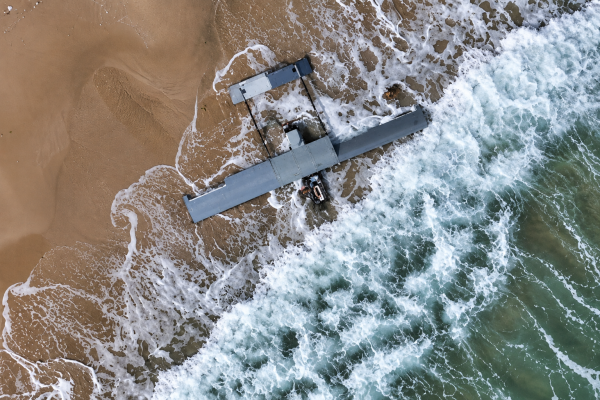
Based on information and analysis published by Ambrey Analytics (10 September 2026). Recent reporting indicates a significant increase in the number of unexploded ordnance (UXO), unmanned aerial vehicles (UAVs) and unmanned surface vessels (USVs) being discovered adrift, afloat, aground or washed ashore throughout the Black Sea basin. While much of the focus since 2022 has been on sea mines, current evidence suggests that drifting unmanned systems and associated debris now represent the more prevalent hazard.
Importantly, this is not solely a risk for vessels trading to or from Russian and Ukrainian ports. Discoveries have increasingly been reported in Romanian, Bulgarian and Turkish waters, including offshore energy areas and coastal approaches. The threat therefore has relevance for any vessel operating in the Black Sea, regardless of its trading pattern or intended port call.
The increase appears linked to the extensive use of UAVs and USVs by both Russia and Ukraine. Many of these systems are reportedly disrupted, disabled or otherwise fail to complete their missions, subsequently entering the marine environment where they may drift considerable distances under the influence of currents and weather. As a result, objects originating in one part of the basin may ultimately be encountered far from their launch or intended target area.
Of particular concern is that the status of many recovered objects remains unknown. While some discoveries have been confirmed to contain live payloads and others have been identified as inert, a substantial proportion have never been publicly assessed. From a practical risk management perspective, crews should therefore assume that any unidentified UAV-, USV- or ordnance-related object could contain explosives until confirmed otherwise by the appropriate authorities.
Members should be aware that the principal risk is no longer limited to traditional mine contact. A drifting USV carrying an explosive payload has the potential to cause severe damage if it were to strike a vessel or detonate in close proximity. Smaller UAV-related debris may present a lower structural threat to larger merchant vessels but could still result in localised damage, fire or injury.
Recommended precautions include:
- Maintaining enhanced visual and radar watchkeeping for small, low-profile or partially submerged objects.
- Ensuring bridge teams are briefed on the possibility of encountering drifting UAVs, USVs, ordnance or unidentified debris.
- Instructing crews not to approach, recover, secure or otherwise interfere with suspicious floating objects.
- Promptly reporting any sighting to the relevant coastal state authorities, VTS or military coordination centres as appropriate.
- Considering the potential for temporary channel, anchorage or berth restrictions if explosive ordnance disposal operations are underway.
- Obtaining voyage-specific security and threat assessments for all Black Sea operations, including calls outside Russia and Ukraine.
Given the continued use of unmanned systems in the conflict and the likelihood that unexploded devices and debris will remain in the marine environment for an extended period, Members should expect this hazard to persist for the foreseeable future. Enhanced vigilance is therefore recommended throughout the Black Sea basin, including the western and southern sectors where recent discoveries have been concentrated.
Source: Ambrey Analytics Ltd., Security Insight "Drifting UXO, UAVs and USVs in the Black Sea Basin", issued 10 September 2026.
Image Credit - Ambrey