
Incompetent or Negligent? Admiralty Court Sets the Bar High

Voirrey Davies
Published: February 09, 2026
There is a high bar to clear when it comes to allegations of causative incompetence and unseaworthiness but that was the Admiralty Court’s finding in the recent decision in The Happy Aras [2026] EWHC 7.
Background
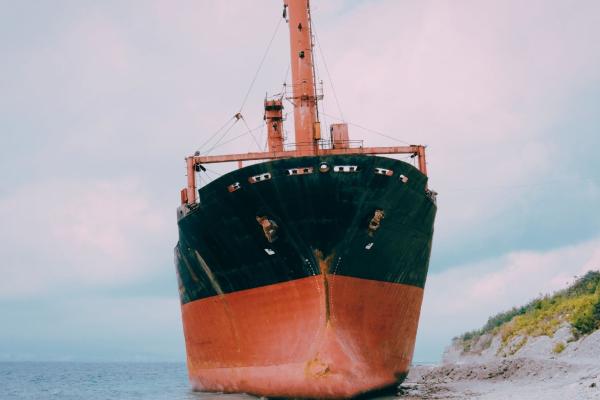
On 20 March 2023, the “HAPPY ARAS” (the “Vessel”) ran aground on the Datca peninsula in southern Turkey. The Vessel was seriously damaged and had to be salvaged. The cargo of soya beans had to be lightened from the Vessel and transhipped.
Owners declared General Average (“GA”). The insurers of Diatold Trade Pte Ltd (the “Cargo Interests”) provided an Average Guarantee to cover such GA contributions as were found to be “reasonably, properly and legally due”. The GA adjustment provided for a GA contribution from Cargo Interests of USD 1,271,095.89. Cargo Interests refused to pay on the basis that the Vessel was unseaworthy.
Unseaworthiness Arguments
The York-Antwerp Rules provide that a shipowner can still seek contributions in GA even though the GA event that occurred was due to their fault. The party from whom the contribution is being demanded can resist the claim such that the shipowner is not entitled to recover the GA contributions, if the loss/expenditure was caused by the shipowner’s “actionable fault” (See The BSLE Sunrise [2019]).
In The Happy Aras, the actionable fault being relied upon by Cargo Interests was the breach of the carrier’s duty of seaworthiness under the Hague Rules.
The test for unseaworthiness is clearly set out in The Cape Bonny [2018] and is whether a prudent owner would have required the relevant defect, had he known of it, to be made good before sending his ship to sea.
Cargo Interests put forward two arguments on unseaworthiness:
- the Vessel was not manned with a competent crew, specifically a competent Master; and
- there was a failure to exercise due diligence in passage planning.
Passage Planning
Following the finding of Teare J in The CMA CGM Libra [2021], allegations of defective passage plans are noticeably more frequent. The position at law is that a defective passage plan can be sufficient to make a vessel unseaworthy.
However, it is important to note that even if the passage plan is defective, the defects must still be causative of the incident – in this case it would have needed to be causative of the grounding, which the court decided was not the case.
Incompetence of the Master
A further aspect of seaworthiness is the carrier’s duty to provide a competent crew. The parameters of this duty are set out in the judgement in The Eurasian Dream [2002]:
- incompetence or inefficiency may consist of a “disabling want of skill” or a “disabling want of knowledge;”
- incompetence or inefficiency is a question of fact which may be proved from one incident, however one mistake does not necessarily render a crewmember incompetent; and
- incompetence is to be distinguished from negligence and could be caused by an inherent lack of ability, lack of adequate training/instruction, lack of knowledge about a particular vessel, a disinclination to perform the job properly or a physical/mental disability or incapacity such as drunkenness.
As with any allegation of unseaworthiness, the incident and consequent losses claimed are required to have been caused by that unseaworthiness.
The Court’s Finding
The arguments on incompetence focused on the difference between being simply negligent and being incompetent. It was agreed by both experts that any professional can make a mistake, or series of mistakes, or simply be having a bad day. A simple mistake would not be enough for incompetence.
The position of the carrier was that the Master’s errors were isolated, casual errors and therefore he was only negligent, he had not stepped across into being incompetent.
The Admiralty Registrar disagreed. When applying the unseaworthiness test as set out in The Cape Bonny, he found the Master hadn’t simply made a mistake. He had consistently taken steps against the company’s SMS, IMO guidance and industry best practice such as failing to plot and record the Vessel’s position, making an early turn rather than following the planned turn in the passage plan, sent the lookout off the bridge despite it being dark, failed to keep a proper lookout, and finally attempted to retrospectively make false entries in the deck and engine logs.
These multiple, serious errors were systemic failings and therefore the test for unseaworthiness was met. The grounding was not the product of an isolated error; it was a result of “complete dereliction of duty” by the Master, showing just how high the bar is for a finding of incompetence. The Registrar found that a prudent owner would have required the competence of the Master to have been made good before sending his ship to sea.
Due Diligence
Having established that the Master was incompetent and that the incompetence was causative of the grounding, the burden of proof lay upon the carrier to prove the exercise of “due diligence” in his recruitment, that is, that proper care had been exercised in relation to the appointment of a generally competent Master and that the Master was specifically competent for that vessel and voyage.
Significantly, the carrier opted not to give any evidence from the crew, including the Master, in support of their due diligence defence. The only statement addressing the due diligence came from the beneficial owner of the Vessel who was also the manager of the carrier. The statement simply said that the Master had his certificates and had worked on previous ships that were similar before, and that he had no reason to doubt the Master’s performance. The owner did not attend the hearing to give evidence in person because of unrelated criminal proceedings in Turkey.
This statement fell well short of demonstrating that the carrier had exercised due diligence. The Eurasian Dream established that certificates alone are not sufficient to show the Master was competent. No further evidence was provided to support the due diligence defence.
The Admiralty Registrar therefore found that the burden of proving due diligence had not been discharged and the claim of the owner for GA contributions failed.
Summary
There is a clear and large space between negligence and incompetence. Any party seeking to assert incompetence has a high bar to meet: simple mistakes or errors are not enough. A defendant would need to be able to show systemic failures and serious errors, as demonstrated in this case.
The decision is also a helpful reminder for owners that demonstrating due diligence isn’t as simple as just presenting certificates. Expert evidence and analysis may be required, and the duty extends from initial hiring to ensuring ongoing competence whilst on board to the extent necessary for the crew to be familiar enough to properly discharge their duties and avoid damage to both ship and cargo.