
US Limitation of Liability Act: Meeting the Covered Small Passenger Boat Exception
Articles

Genevieve Holloway
Published: 4月 16, 2026
Background
46 United States Code (U.S.C.) § 30501 affords ship owners the right to limit their financial exposure from claims for damages arising from a maritime incident in certain circumstances. Derived from the historic Limitation of Liability Act 1851, this statute provides a structure for ship owners to potentially limit their liability when the damages occurred “without the privity or knowledge of the owner”. In situations where limitation is granted, any damages awarded are capped to the value of the ship and its freight in its condition at the end of the voyage regardless of the true value of the claim against the owner. The exception to this is in the case of death and injury claimants. If the vessel value limitation fund is insufficient to satisfy those claims, then a separate fund is created which is calculated based on $420 multiplied by the vessel’s gross tonnage. Although this does “not apply to pleasure yachts, tugs, towboats, towing vessels, tank vessels, fishing vessels, [or] fish tender vessels . . .”
The application and benefits of this statute are far reaching. It applies to a broad range of claims which a ship owner may face including personal injury, property damage including environmental harm and cargo losses. It also applies to a wide range of marine vessels including commercial cargo ships, passenger ships, tug and barges and private recreational vessels. This provision provides ship owners, and their insurers, a degree of certainty where claims can be significant in the maritime world.
Successful limitation actions must be filed within six months of the first written notice of the claim and, this uniquely maritime doctrine, will always be heard in Federal Court irrespective of where the primary claim has been, or will ultimately be, filed.
2022 Amendments
Despite much public criticism over the years, the Limitation Act has stood the test of time and can be seen upheld in courts throughout the US. But one limitation application filed following a particular maritime incident sparked outcry and led to significant change for the act. In September 2019, a 75ft dive boat CONCEPTION caught fire off the coast of California in which thirty-four people died. Just days after the tragedy, the owners filed a limitation of liability action to cap all damages to the post-accident value of the boat – zero in this case as the boat ultimately sank (save for the $420 per GT calculation noted above).
In December 2022, amendments to the Act were introduced to overcome this perceived injustice and an exclusion was introduced which brought substantial changes in the rights and exposures of small passenger boat owners. “Covered small passenger vessels” are now precluded from the benefits of the Limitation of Liability Act. Once protected from the significant exposures often seen in US maritime cases, particularly with personal injuries, these owners are now liable for full damages and are faced with greater costs associated with this increased risk. For some small day-boat operators (dive boats, tour boats, water taxis etc.), this threatened their ability to continue to operate owing to drastic premium increases.
Navigating the definitions
To understand which vessels now fall within the scope of the new limitation exception, it is necessary to work through the statutory definitions in the correct order. Although 46 U.S.C. § 30501(1) sets out the definition of a “covered small passenger vessel,” it does so by expressly incorporating the pre existing definition of “small passenger vessel” in § 2101. This means analysis must begin with § 2101 before turning to § 30501, in effect, forming a two-part test.
Step 1 — Is the vessel a “small passenger vessel” under § 2101
Under 46 U.S.C. § 2101, a “small passenger vessel” is defined as:
“(47) “small passenger vessel” means a wing-in-ground craft, regardless of tonnage, carrying at least one passenger for hire, and a vessel of less than 100 gross tons . . .
- carrying more than 6 passengers, including at least one passenger for hire;
- that is chartered with the crew provided or specified by the owner or the owner’s representative and carrying more than 6 passengers;
- that is chartered with no crew provided or specified by the owner or the owner’s representative and carrying more than 12 passengers;
- that is a submersible vessel carrying at least one passenger for hire; or
- that is a ferry carrying more than 6 passengers.”
A vessel must satisfy this definition first and qualify as a ‘small passenger vessel’ under § 2101 before it can then be assessed whether it also meets the criteria for a ‘covered small passenger vessel’ under § 30501.
Step 2 — Is the vessel a “covered small passenger vessel” under § 30501
Under 46 U.S.C. § 30501 (1), a “covered small passenger vessel” for limitation of liability purposes is defined as:
- “means a small passenger vessel, as defined in section 2101, that is —
- not a wing-in-ground craft; and
- carrying —
- not more than 49 passengers on an overnight domestic voyage; an
- not more than 150 passengers on any voyage that is not an overnight domestic voyage; and
- includes any wooden vessel constructed prior to March 11, 1996, carrying at least 1 passenger for hire.”
Recent Decision
In a recent case for one of the Club’s Members, the Court agreed that these definitions should be considered and applied in the order set out above. Rather than testing if a vessel meets the definition of a ‘Covered Small Passenger Vessel’ initially or in isolation, the Court agreed that this must be done in the proper sequence.
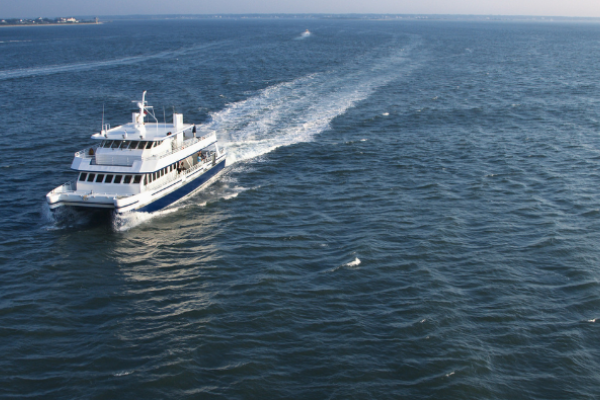
Following a personal injury on board a 54ft commuter ferry, the vessel owners sought to invoke a limitation action to cap damages payable to the plaintiff up to the value of the vessel. The ferry carries up to 101 passengers and does not engage in overnight voyages. Based on these facts, the vessel sits squarely within the definition of a ‘covered small passenger vessel’ as provided for under the new § 30501 meaning this vessel would be caught by the new exclusion from limitation. However, operating in the middle of the day, the ferry was only carrying one passenger at the time of the incident – meaning the vessel does not meet the ‘small passenger vessel’ definition under § 2101 to be able to continue to the second part of the test. Owing to this specific point, limitation was granted.
Summary
The implications of this exclusion for small passenger boat owners and their insurers are significant, with increased financial risk and operational challenges. It's important that owners are alert to the relevant sections of the U.S.C. and determination of whether a vessel falls within this exclusion requires careful analysis of the statutory definitions.